The Documentary Film
Garbo the Spy, a documentary
Produced and directed by Edmon Roch
In English, Spanish and Catalan, 2011
Of the childhood and youth of Pujol little is known — only what he himself said decades later. There isn’t much reason to doubt his story, except, of course, that he was a liar without peer. In any case, he seems to have been a headstrong young man from a well-to-do family, who left school early for the sake of independence and began working in various jobs. In the Spanish Civil War, he was drafted by the army of the Republic, and he didn’t like it. He deserted from the Republicans, crossing over to the Nationalist side during a battle. Many years later, he would say that he hated the fascists and the communists equally.
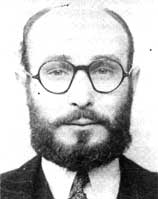
In the early years of the Second World War, Pujol found himself in Madrid, unemployed, with few prospects in the sluggish wartime economy. He decided to become a spy. First, he went to the British Embassy to offer his services. They rejected him. So next he went to the Abwher (the German military intelligence service), with a similar offer, claiming to be a Spanish Civil servant, very devoted to the Nazi cause, who often travelled to England as part of his job. The Germans believed him and took him on as a spy. In fact, he had no government job nor any papers that would allow him to travel to England in wartime, and so he moved to Lisbon and there, with the help of books from the public library, began to construct a network of spies — a group of 22 (or 27) totally fictitious agents — operating throughout the British Isles. Even as he submitted his false reports to the Germans, he continued, from time to time, to offer his services to the British. Eventually they welcomed him onto their team, but only after learning, from other sources, that the Germans already believed his reports. At last Pujol was able to travel to England, now as an official member of MI5, the counter-espionage agency, and from then on his lies were no longer mere nonsense, plausible inventions manufactured to earn a paycheck: now they were a crucial part of the war strategy. In particular, they played a key role in Operation Fortitude, a fake version of Operation Overlord, which is to say, that Pujol’s lies were part of the massive effort to convince the Nazis that the Allied invasion of France would land not in Normandy, but in Calais.
After the war, Pujols faked his own death in Africa, established himself in Venezuela under a new name, and began a successful career in petroleum and real estate, aided greatly by the small fortune that the Germans had paid him, and which the English allowed him to keep. Decades later, he was contacted by a British historian and invited to the fortieth anniversary of D-Day.
He attended the ceremonies as a hero.
